

Posted on Leave a comment

Finding Inspiration in Unlikely Places

DSC_0679

Summer is a wonderful time to enjoy outdoor activities and breath in the beauty of nature. It’s refreshing to be away from my glass studio in environments rich with color, pattern and new scenes. I cherish time cooling off on the water and the exhilaration of hiking in the woods. The outings clear my mind of old design themes, they rejuvenate my spirit and inspire new design ideas.

I may be off work, but my creative subconscious is on duty collecting tidbits that’ll later be integral parts of my new art. I seek exciting new compositions by studying tiny details like the delicate curled shoots of ferns. I imagine the extreme color combinations studying the broad strokes of a spectacular, cotton candy pink sunset. Even familiar settings, seen with renewed artistic curiosity, offer new appeal.

Farytale Forest 2Fairy Tale Forest from my Painting with Frit Video

Fairy tale Forest was inspired by a path I frequently walk in the woods. It’s an enchanted place with specked shade, inviting curves that promise adventure and the musical sounds of nature alive in the brush. Tall pines and century old oaks form a canopy overhead. The cathedral like tunnel makes me feel small, at ease and safe. It’s as if the trees are guarding me with the wisdom of their age. It’s such a magical place, I half expect to see a white unicorn trotting around palmetto bushes.

The truth is the path doesn’t really look like my design. I exercised my artistic license. I designed the art to convey the way I feel, the comfort and joy I have when I’m strolling down the leaf blanketed trail.

I never would have stretched my artistic vision to that extent without the actual experience of walking down that path.

Paradise Palm

Paradise Bay from my Painting with Frit video.

Paradise Bay was inspired by a favorite lagoon on a lake. Again, the artwork loosely represents the landscape. It’s really a representation of good times and fond memories of time spent with my family.

Leaf tower


River Bottom was inspired by the ditch that lines my street. Really. I was walking one morning and noticed the sunlight shining on the water in the retention ditch on my road. The sun pierced through the clear water down to the bottom where it lit up the tiny green leaves of mossy plants. They sparkled like glitter covered light bulbs. It was so captivating I then noticed some lacy tree leaves suspended in time, and the striking shadows of tree trunks stretching across the placid surface of the water. I thought, this is a beautiful scene, how can I render this in glass?

The project looks simple. You have to see it in person, after hearing the story to really appreciate the true beauty and depth of River Bottom. The take away, the invaluable lesson, is that beauty is all around us. We just have to look for it and then let it inspire us to be creative.

Take it outside!

This summer while you’re exploring beaches, mountains and cities open yourself to discovery. Then, when the artistic spark flares, you’ll have an exciting collection of new ideas to fuel what you fire.

Happy fusing,

Lisa

Follow my blog for more tips and tricks!

Painting with Frit DVD Cover

Painting with Frit is now available as a download on my website.

For even more tips, tricks and inspiration, Join my Premium Video Subscription and gain access to ALL 45 single project courses today, with new ones added monthly!

Posted on 2 Comments

Learning Goes Both Ways

Interwoven

Inspiration is Here 

A few years ago, I hosted my Sculptural Fused Glass Workshop. We enjoyed 4 incredible full days of creating. The students were awesome! They were excited about learning new techniques and eager to try new ideas.

This class was about producing multiple 3-D glass sculptures that reflected the individual artist’s personal style. To accomplish so many projects in the condensed time-frame I adopted a new accelerated lesson plan. It was a huge success! The students were thrilled with the upbeat pace of the class because it increased the number of projects they were able to make.

DSC_0345

On day one they designed, assembled and loaded four different, full-size pieces into the kilns. Plus, they applied different advanced techniques and new design concepts on each of the three pieces.

We kept the quickened pace up all week. The rate enabled the students to make an impressive number of advanced projects, plus custom glass bases. On day two, even I was stunned when I had to re-prime the 11 ceramic kiln shelves we used to fire projects.

Students favorite things about the class included: learning new techniques, making so many projects and my willingness to let them create as they saw fit.

DSC_0368

We had a few oops we had to overcome.

When working on so many complex projects there’s bound to be some construction issues that come up.

A student realized, before loading the glass in the kiln, that the iridized coating was face down on the flower petals she cut for a floral vase. We wanted the pretty iridized side to show on the outside of the art, not the inside. So, we rearranged the assembly. Instead of building on a clear glass base, we turned the petals over and capped them with the clear. Our results were different than originally planned but equally as nice. Where the iridized red peeked out from under the clear glass the vase rim had a satin shimmer. The variation in shine added detail that was visually attractive in the finished piece of art. Plus, it added a personalized touch to the artwork.

DSC_0398

Another student wanted to work with powder frit. His project was accidentally bumped after it was loaded in the kiln. The frit moved causing the pattern to be uneven. Luckily, we saw it before firing the glass. The fix was easy. We simply sifted more powder on top of the uneven pattern and then re-traced the design in the frit. In the end, the repair wasn’t noticeable at all. The piece came out beautifully.

DSC_0393

We had a few welcome surprises.

Students were surprised by the amount of glass we used, that they learned how to use saws and the enormous amount of projects completed.

While gluing one of the sculptures together a student and I struggled a bit to get the vertical glass propped up in the position we wanted. We thought we had it. But the next day the glue didn’t hold. Instead of being upright, the fused glass leaned to one side. It wasn’t our intention to make a piece that looked like that. But we decided, unanimously as a class, that we liked the new look. The upside is, we now have a brand new sculptural profile to make in the future.

DSC_0353

Even I learned a few things.

When working on this number of projects the variables and possibility for unexpected surprises are increased. The finished results aren’t always what we planned or expected.

I learned that I have to adjust the temperature on one of my kilns. My Free Flow fusing program was firing too hot. As a result, the kiln wash stuck to the back of the fused glass. The higher heat also increased the amount of texture on the back side which reduced the clarity and shine of the glass. Lowering the fusing temperature would increase the clarity and shine on the backside of the glass. The minor adjustment would improve the vividness of the finished pieces of art.

Predictability is an illusion. We like to think we’re in control, but sometimes things don’t go as expected. No matter how much you prepare, plan and practice, you have to be ready for a few glitches.

I’ve slumped over the same custom mold over a dozen times. I thought I knew what to expect. All the parameters were the same. We used the same type of glass, cut the same size, in the same kiln, using the same slumping program. What could possibly go wrong?

The glass didn’t slump! It refused to conform to the fiber blanket mold. I fired it again and held it longer. No luck. I fired it again and increased the temperature by 10 degrees and the hold by 10 minutes. The glass still hovered above the mold.

DSC_0339

Then it occurred to me in the middle of the night, when I do all of my major problem solving, maybe I forgot something. Yup, operator error. Sucks right! I didn’t line the fiber blanket with ThinFire fiber paper. It acts as a release that allows the glass to slide down into the mold. And that’s why taking notes is so important, even for seasoned professionals. Write it down and then consult your notes before firing. It saves time, money and frustration.

DSC_0403

Lastly, I think I enjoyed the photo shoot of the finished sculptures more than the students. To their credit, it was the end of the last day. They’d been working diligently, stretching their creative minds for 4 full days. It’s no wonder the students were tapped out. They put a lot of energy into making numerous awesome pieces in a short period of time. In total, the three students made more than 20 projects combined! The high res photos are evidence of the impressive work they did.

DSC_0378

They came as strangers but left as friends.

Taking a class here is more than just fusing glass. It’s also about building relationships with other glass artists who have similar ambitions, interests and obstacles. Being in class is about showing pictures of your finished work, talking about how to sell your art and sharing solutions to common problems we all have. It’s a real thrill for me to bring different artists together so we can connect and build lasting friendships.

It was a pleasure to work with this group. I was impressed how the students brought their own artistic style and favorite color palate to the projects. I really enjoyed helping them build on their individual strengths to take their artwork to a higher level of complexity.

DSC_0389

Wherever you are in your artistic journey you’re doing great! But we can all use a little inspiration now and then to re-spark our creative thinking and expand our skills. It’s artistically rejuvenating to give yourself the gift of knowledge, productivity and of course friendship.

Are you ready for a lift? Join my Premium Video Membership and continue to learn and grow with me!

Happy fusing!
Lisa & Niki

Follow my blog for more tips and tricks!

YouTube http://www.youtube.com/watch?v=dhOifd7wukk
Facebook www.Facebook.com/LisaJVogt

Twitter https://twitter.com/lisajvogt

Instagram https://www.instagram.com/lvogt_originalsinglass/

Video covers - Copy

Watch it NOW! Start fusing today!

Downloadable instructional videos for every skill level.

Book covers

Check out my eBooks for elegant patterns and detailed fusing instructions. 

Interwoven


Posted on Leave a comment

How to Create Shadows and Shading

You’re wondering why is this subject important? You’ve likely had success working some element of shading into your pieces and that’s great. However, you may not know about the seldom discussed advanced techniques experienced artists use to produce more sophisticated compositions. With thoughtful planning, you can apply these simple techniques and drastically increase the richness of your work.      

When creating shading, it’s natural to reach for black frit or black glass. Black efficiently separates the foreground from the background. Black is also great for outlining your subject. However, there’s a better solution that adds richness to your scene.

When you use black to make shadows it creates a visual hole in your work. This void pulls the viewer’s attention away from your composition. For this reason, I use black as little as possible. I apply it with purpose for specific details in my designs. Instead of black, I use very dark blue, chocolate brown, deep purple or ruby red to make shadows in my pieces. I select the dark color that best suits the color scheme in my artwork. Using powerful high contrast colors adds velvety depth and an incredible richness to the setting.

How to create shadows with color.

Wine Glass as seen in my Simple Pleasures Video

Here I used dark blue to establish the linear details that translate into a grape vineyard behind the wine glass. The deep shadows the blue color creates, give the scene a relaxing late afternoon mood. The border is dark purple which mimics the color of grapes and wine.

Octopus Tray as seen in my Premium Video Membership

Here I used dark red to make shadows on the underside of the octopus tentacles. This application also makes the tentacle visually round and full. Dark red also worked beautifully to outline the octopus body and place it in front of the tentacles that curl behind its body. The only black in this piece is the eye detail.

Fairy tale Forest as seen in my Painting with Frit Video

There’s no black in this lush scene. The dark shadows in the trees and along the path are made with dark blue. The shadow cast on the woodland path is a combination of purple and dark amber frit. Get creative with your color combinations to build up dark recesses that make your highlighted details pop.

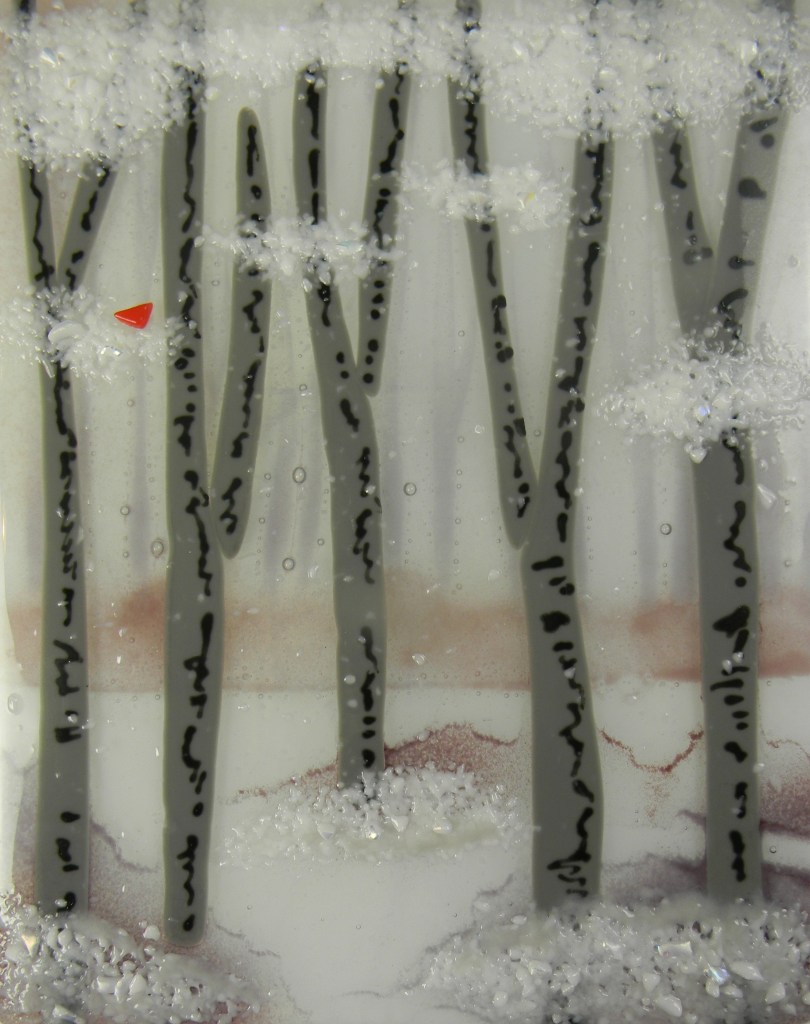
Winter Landscape as seen in the winter issue G.P.Q. Magazine Jan 2023

In this piece of art, black is limited to the lines on the tree trunks. I selected muted tones to create a quiet, calm, and relaxing setting. The shadow under the trees are created with medium purple frit. It simultaneously gave me depth and softness which I wanted to portray in this winter scene.

Welcome Fall as seen in my Premium Video Membership

When making this seasonal piece I wanted to maintain a warm yet rich color palette. I used a small amount black in the word welcome and in some of the letters that spell out FALL. When it came to adding shadows to the pumpkin, I used orange opal frit. The contrast is subtle but effective. I’m pleased with the stylized design and the inviting warmth it adds to my home.  

You got this!

Don’t worry about missing black. Once you substitute colors for black, you’ll love the effects you’re able to create. You’ll be amazed how switching to dark colors transforms your art and brings it to life.

Artists take what they see and make it new.

We take an ordinary scene and turn it into something new that reflects our sense of drama and whimsy. Using rich colors, instead of black, is a fabulous way to push designs in any direction you want to establish a personalized mood and tone. Give it a try. The possibilities are endless. You’re only limited by your imagination.

Watch the video here.

Follow my blog for weekly inspiration sent to your inbox! 

Happy Fusing!

Lisa & Niki

Premium Videos by Lisa


Get your Artwear!

Posted on Leave a comment

5 Tips to Better Glass Cutting

Be a Cut Above

One of the fastest and easiest ways to improve your fused glass art and dramatically expand your design style is to develop your glass cutting skills.

The beauty of working with fusing is the simplicity of the medium. Many people come to the craft with little or no glass cutting experience. Due to the ease of fabrication and wealth of readily available information, they’re successfully producing attractive pieces from the start.

But if you’re now tiring of the simple cut and assemble methods that got you started and longing to move in a more advanced direction, a small dose of technique is the jump start you need.

It may seem like a trivial topic to address, but your project complexity is in direct relation to your cutting confidence. In other words, the better you cut, the more likely you are to venture outside of your comfort zone and take on more challenging projects.

Here are some tips to get you started. 

1 Consistent pressure.

Contrary to popular belief, it doesn’t take a heavy hand to make a good score line on glass. What it takes is consistent, medium pressure from the very beginning to the very end of the score. The glass cutter should, “sing” as it rolls over the surface of the glass. It’s a pleasant, consistent sound beginning to end. It’s not a cringing grinding noise. A good score is visible its entire length. But it’s not messy and littered with thin splinters. The grinding noise and splinters are signs you’re applying way too much pressure.

Many beginners start strong but let up the pressure as their hand moves farther away from their body. In this case, breakage tends to occur ¾ of the way down the score line. Beginners believe the score comes solely from the hand. A good score comes from making your wrist, elbow and shoulder one rigid tool. This combined strength and rigidity helps you apply consistent pressure the entire length of the score even at an awkward distance from your body. 

When cutting an unusually long piece, I turn the glass so I can run my score right to left instead of away from my body. This way I can move my body along with my hand and more easily maintain the consistent pressure needed for a successful break.    

2 Cut on the smoothest side of the glass.

In some cases, I prefer the look, color or pattern on the textured side of a sheet of glass. I turn the glass over and cut on the smoother side and then simply turn the glass back over when I assemble my project. The glass cutter wheel will have better, more consistent, contact with the glass the entire length of the score if you cut on the smoothest side. 

3 Beginning and end.

Try to start your score as close to the leading edge of the glass as possible without falling backward off the glass. Apply consistent, medium pressure from the very start. End the score as close to the far edge as possible without falling off the glass. Repeatedly falling off the glass edge will damage the cutter wheel and could possibly cause the glass to shatter.  

4 Use the right tool for the job.

Use a strip cutter or circle cutter when applicable. Accuracy is key for professional quality artwork. These tools give your work consistency. Plus, they save material by reducing waste and breakage.

When cutting strips, I cut a few more than I need and select the best, straightest strips for my project. The extra pieces find their way into smaller projects, pot melts or free flows. Nothing goes to waste.

Whenever possible, I opt to use running pliers over grozing or breaking pliers to break glass away from a sheet. Running pliers give the most reliable results. They work best if the glass being removed is at least as wide as the rubber tipped plier jaw. When breaking narrow or small curved pieces away, I choose grozing plies because the narrow jaw fits in tight places and allows me to get close to the score line.     

5 Use paper patterns.

Don’t hesitate to cut around a paper pattern to include an intricate shape in your work. This is a terrific way to transition away from strictly geometric designs and into pieces with lively organic elements.

Glass wants to break in a straight line. To cut rounded shapes, we make a series or gradual curves and break the excess glass away in steps until we have a glass shape that closely resembles our pattern.  

When cutting around a paper pattern piece, cut as close to the paper as possible without running into it. Beginners tend to cut a wide safety halo around the paper. It just postpones the inevitable. Be brave. Go for it. If the glass is going to break unfavorably the halo, no matter how heavenly, won’t prevent it.

Something to build on.  

The more time and effort you put into each step makes the next step easier and the finished product that much better. Don’t rush a project just to get it in the kiln. Give it the time it needs and produce your best work, every time. If you have to ask, “Is this good enough,” it probably isn’t. Do yourself a favor, re-do that piece or step. You can thank me later when you’re doing the, my piece came out awesome, happy dance.  

Go ahead. Cut it up!

Happy fusing!
Lisa & Niki

Get FREE advanced glass fusing tips and trick in your inbox. Follow my blog for weekly inspiration.

Artwear T’s by Lisa Vogt

Artwear Designed for Artists by Artists Tell them how you really feel with bold T-shirts, Eco-conscience tote bags and sassy mugs.

Artwear Eco-totes by Lisa Vogt
Artwear Mugs by Lisa Vogt

Get it now! Start fusing today!

Downloadable instructional videos for every skill level.

Instructional eBooks for every skill level.

Posted on Leave a comment

Tropical Fish How-to

14.5 inch x 7.25 inch

Enjoy summer’s sunny, fun filled days with this shimmering tropical fish tray.

The most wonderful characteristic of glass is its generous nature. If you open yourself up to discovery, glass continuously offers the curious artist brand new opportunities to be creative. I’ve been working with this medium for more than 30 years now! And it still amazes me that a simple, new twist on old techniques can still give me a huge thrill and excite me as much as a carefree kid on summer vacation.

Due to the number of projects I make, I have a lot of scrap glass. So, when I find a new, clever way to make something beautiful with left over material, I get fired up. And best of all, the reliable techniques used here are fun and easy to apply. It’s the unusual pairing of multiple design methods that makes this tropical fish tray so attractive and enjoyable to build.

Don’t let the complex looking design scare you. The different techniques I used to create this bright reef dweller are broken down into easy, manageable steps.

Tropical Fish Tray by Lisa Vogt

 Let’s get started.

 Use the pattern as a guide to cut the base layer out of clear glass. Grind the glass to improve the shape and remove any sharp edges. Clean the glass with water and then dry it with a towel. Set the clear base aside.

Number the pattern pieces on 2 copies of the fish pattern. This will simplify the assembly later. Cut the pattern up with scissors. Use a glue stick to hold the paper pattern pieces on the glass. Cut the glass as close to the pattern as possible. Remove the excess glass with running pliers and grozing pliers. Use the same method to cut and shape the fish scales.

Save your scrap pieces to make the open and airy background pieces of the tray.

Grind the cut fish pieces to remove any sharp edges. Clean the ground glass with water and then dry the pieces with a towel. Arrange the ground fish pieces on the clear base layer. Glue the pieces to the base with fuser’s glue. Let the glue dry before moving to the next step. Otherwise, the glass will slide around when you apply the frit.

Using a spoon, pour fine Cobalt blue frit on the fish. Gently sweep it into the gaps with a small paint brush. This adds contrast and detail to the design. Run a line of frit down the top and bottom fins. Use a narrow paint brush to make a scalloped design in the frit. Remove any excess frit with the brush.

Tropical Fish Tray by Lisa Vogt

Sift medium blue opal powder frit on the fish head, tail and small fin. Clean up the edges and make them crisp with a small brush. Sprinkle medium white frit on the head and tail. Place a small scrap of black on the head to make the mouth. Arrange a premade dot on the head for the eye.

Making eyes. I have a little container full of fused glass dots that I pull from when making projects that have eyes. To make dots I cut ¼ inch squares out of white glass. I cut 1/8 inch squares out of a black backed dichroic glass. The small dichroic square is stacked on the white glass and glass is fired to a full fuse temperature using the guide below. The small pieces plump and ball-up during firing. They make super cute, expressive eyes for a variety of projects.

Cut the border base layer out of clear glass. Cut a second layer out of white glass. Stack the white strips on the clear strips.

Cut ¼ inch wide strips of glass out of clear glass and colors that complement the fish colors. Using mosaic nippers trim the strips into small squares.

Arrange the glass border and the assembled fish on a primed, or a fiber paper lined kiln shelf. Place the cut squares and scrap on the kiln shelf around the border and fish. For nice, individual round shapes make sure there’s adequate space between each of the little pieces. (If they, touch you’ll end up with ovals and wiggly worms.) Note: It’s not necessary to grind the scrap before firing. The organic shapes they create add softness to the design.

Tropical Fish Tray by Lisa Vogt

Yes, laying out all of these tiny pieces is tedious. Tough it out. The dots and dashes made from the scrap are worth the extra effort. I promise you’ll love the variety of shapes and increased selection you have to choose from when you assemble the tray background. Plus, you can use the extras dots and dashes in future projects.

Tropical Fish Tray by Lisa Vogt

Fire the glass to a full fuse temperature using the guide below.

Place the fused fish inside the fused border on a primed or fiber paper lined kiln shelf. Fill in the open background space with the dots and dashes made from scrap. Make sure the pieces are in contact with each other, the border and the fish to connect the entire project together.

Tropical Fish Tray by Lisa Vogt

Dots and Dashes bowl bonus project. This adorable bowl was inspired by the fun, organic shapes made by fusing the randomly shaped scraps left over from cutting the fish. I had so much fun laying out the fish background, I couldn’t stop myself from doing more. This little gem is so simple and super fun. Just draw a 6 inch circle on shelf paper. Arrange leftover dots and dashes inside the pencil line. Fill the space. Make sure the pieces of glass are in contact with each other to connect the whole circle.

Tropical Fish Tray by Lisa Vogt

Fire the assembled pieces to a tack fuse temperature using the guide below.

Carefully place the tacked fish tray on a ceramic mold. Place the small bowl on a ceramic mold. Slump the tray and bowl using the project specific guide below. This gentle slumping guide works well for pieces that are delicate and have open spaces in the background. The temperature is lower than usual, and the hold is longer. This conservative slump guide ensures these glass projects retain their size and shape, without stretching, during heating and slumping.

This project evolved as I went along. I started with the free-form fish design. Then I liked the idea of incorporating an open background that mimicked bubbles. I was concerned, strength wise that the tacked dots might not be strong enough to support the weight of the fish. That’s when the border idea came to me. The border would give the project a nice visual frame and add support to the overall tray.

In the end, I’m happy with the unexpected mix of techniques and the way the tray came out. Design wise, I like how the clean straight lines of the white border contrast the bright, fluid background. And I’m pleased with the way the stylized fish brings uplifting, aquatic summertime activities and memories to my mind. I hope you have as much fun as I did making a Tropical Fish Tray of your own.

Tropical Fish Tray as seen in Glass Patterns Quarterly Summer 2019

GPQ Summer 2019

Watch the Fish Tray video here: https://youtu.be/X86oD6HUafo

Happy Fusing!
Lisa & Niki

 Fusing Guide

Segment 1: Ramp 300 F/hr to 1300 and hold 30 min.

Segment 2: Ramp 500 F/hr to 1465 and hold 10 min.

Segment 3: Ramp 9999(AFAP*) to 960 and hold 40 min.

Segment 4: Cool to room temperature.

*As fast as possible

Tack Fuse Guide

Segment 1: Ramp 300 F/hr to 1365 and hold 10 min.

Segment 2: Ramp 9999(AFAP*) to 960 and hold 40 min.

Segment 3: Cool to room temperature.

*As fast as possible

 Gentle Slumping Guide

Segment 1: Ramp 300 F/hr to 1200 and hold 20 min.

Segment 2: Ramp 9999(AFAP*) to 960 and hold 40 min.

Segment 3: Cool to room temperature.

*As fast as possible.

NOTE: Kilns fire differently. Test fire these guides in your kiln and then make adjustments as needed.

Follow my blog for more tips and tricks!

Website www.LisaJVogt.com

YouTube http://www.youtube.com/watch?v=dhOifd7wukk

Facebook www.Facebook.com/LisaJVogt

Twitter https://twitter.com/lisajvogt

Instagram @lvogt_originalsinglass

Instagram through_the_artists_lens

Vacation Essentials eBooks by Lisa Vogt SHOP http://www.LIsaJVogt.com

Do you get my newsletter? If not you’re missing out on sales and special promos. Sign up on my website right-hand sidebar.

Artwear by Lisa J Vogt

 Artwear Designed for Artists by Artists Tell them how you really feel with bold T-shirts, Eco-conscience tote bags and sassy mugs.

Watch it NOW! Start fusing today!

Glass Fusing Videos by Lisa Vogt


 Downloadable instructional videos for every skill level.

eBooks by Lisa Vogt

Check out my eBooks for elegant patterns and detailed fusing instructions.