

Posted on Leave a comment

Unlock the Mystery of Pattern Bars

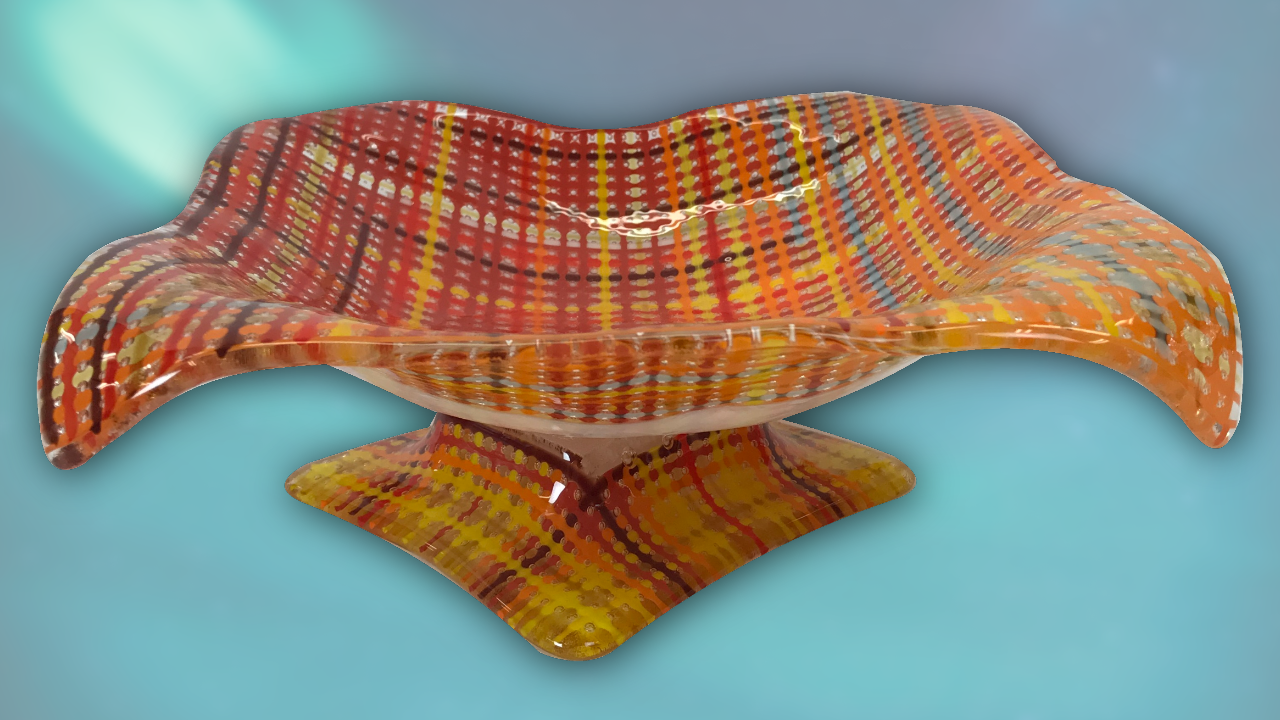
AGF Reflection 1

Go sculptural! Are you an adventurous fuser ready to push boundaries and apply advanced techniques? If you answered yes, this project is for you.

The beauty of pattern bars is that they can be made in a wide variety of sizes, styles, shapes, and designs. The idea is to create a decorative element that can be cut into pieces and reassembled to make a unique and ornate focal point within your art.

Another nice thing about pattern bars is you can work small and still make a huge impact. So, donโ€™t hesitate to try making your own decorative elements even if youโ€™re new to fusing or have a small kiln. All you need is a little imagination and heat resistant material to contain your glass during fusing.

When I came up with the idea to fuse an inverted stack of glass, I wasnโ€™t exactly sure what the resulting slab would look like. I didnโ€™t let the unknown stop me from trying. I knew the hot glass would fill the open space in the container I created, but I wasnโ€™t sure if the design would retain its linear appearance or if it the colors would blend together. As luck would have it, I got a little bit of both.

1

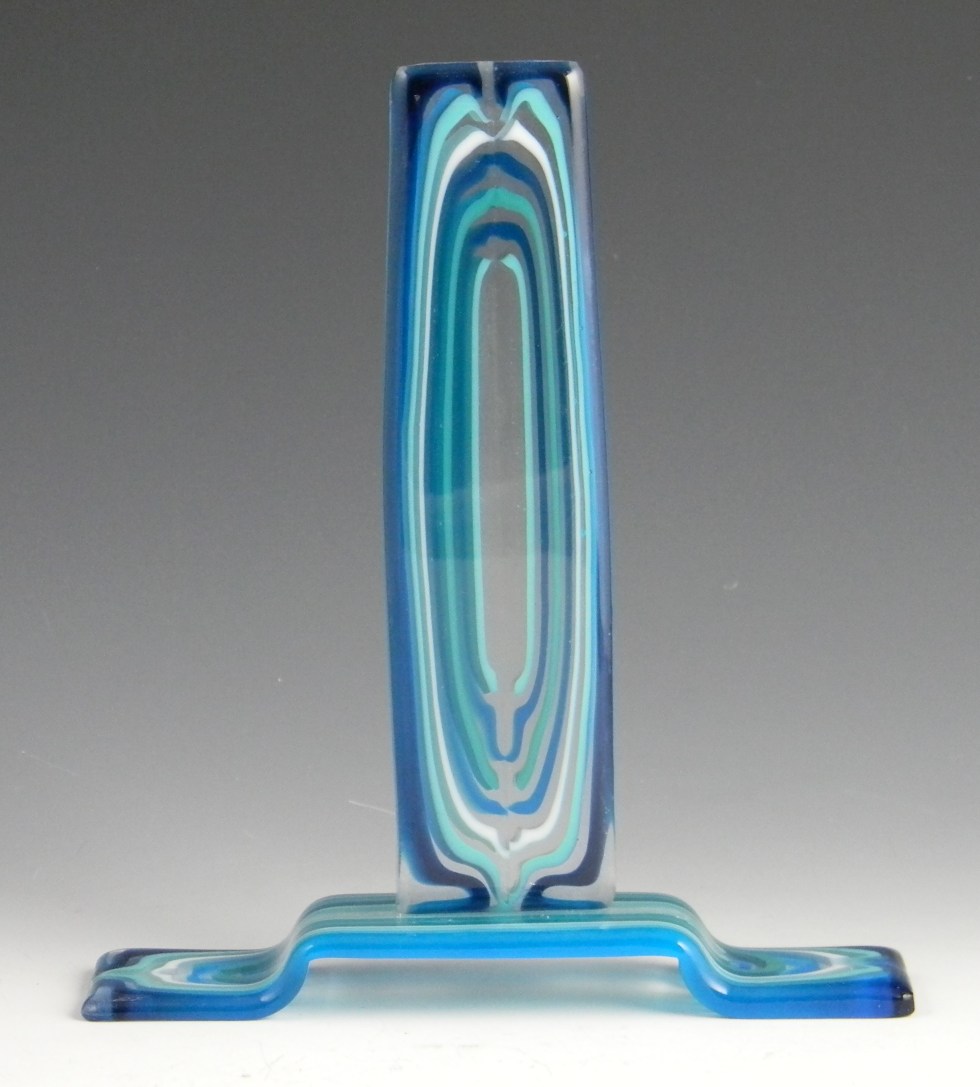
To make Reflection I stacked 16 pieces of glass. I started by cutting 3 inch wide strips from select opal glass colors and transparent glass colors. I also cut 3 inch wide strips of clear glass. The 3 inch wide strips were then cut to different lengths. No two pieces were the same length. I alternated color glass and clear glass. The glass was then stacked on the kiln shelf with the shortest piece down on the kiln first. Each consecutive layer was longer than the previous layer.  It was like building an upside down pyramid.

3

Tip: When selecting my glass, I like to use a combination of opal glass, clear glass and transparent color glass. Each type of glass brings its own special facet to the pattern. Opal colors show off the intricacy of the pattern really well. Clear glass boosts the visual depth of the design, while transparent colors give the finished artwork a regal jewel tone quality.

4

When I fused the stacked glass, I contained it with ยฝ inch thick strips of fiber board. I use fiber board kiln shelves in my kilns. When they get damaged, I cut them down and use them as dams to contain thick glass. My firing guide is below.

5

Why do you have to dam the glass you ask?

When stacked glass is fired to the full fuse temperature of 1465 degrees it will spread out to a ยผ inch thickness. To construct thicker projects, we contain the glass with props, in this case fiber board. The fiber board is then held in place with kiln posts.

Tip: When I mention materials that I use in my kilns, like fiber board, Iโ€™m always referring to materials that I purchase from my art glass supplier specifically for kiln use. Donโ€™t substitute other building materials from your local hardware store to save money. It will cost you in inconsistent results and possible kiln damage.

6

After the glass is fired the pattern bar was cut into long ยผ inch thick slabs with a wet saw. I use an inexpensive tile saw fitted with a wet blade for my heavy duty strait cutting. Itโ€™s fast, easy to use and gives me consistent results. The cut strips are then reassembled so the pattern on the left side is a mirror image of the pattern on the right side of the art. The glass is then fired a second time to a full fuse temperature. This bonds the pieces together and makes all of the surfaces shinny. I made two matching components. One will was used as the vertical portion of the sculpture.

8

I slumped the second component over a small block of ยฝ inch thick fiber board using the firing guide below. This element was then used as a decorative base to display the vertical portion. I glued the two pieces together with E6000 adhesive. I prop the project up and let the glue dry overnight.

9

Tip: Go the extra mile and build your own custom display bases for your special pieces of fused glass. It adds a personal touch that elevates the overall quality and sophistication of your artwork.

Reflection 2

Pattern bars are a great way to add energy to your fused glass artwork. Theyโ€™re easy to make and the number of design variations and color combinations is staggering. Plus, you can work small and still have dynamic results. Next time your kiln is sitting idle try an experimental pattern bar or two. Just watch out. The low pressure assembly combined with the thrill of unpredictable results is an addictive potion. Iโ€™m sure your new work will be both mysterious and magical.

Wherever you are in your artistic journey youโ€™re doing great! Weโ€™re all learning new things every day. Keep going. Enjoy the journey.

Thank you for all the positive feedback about my blog and videos. Itโ€™s your kind and encouraging support that inspires me to keep sharing.

Happy Fusing!

Lisa

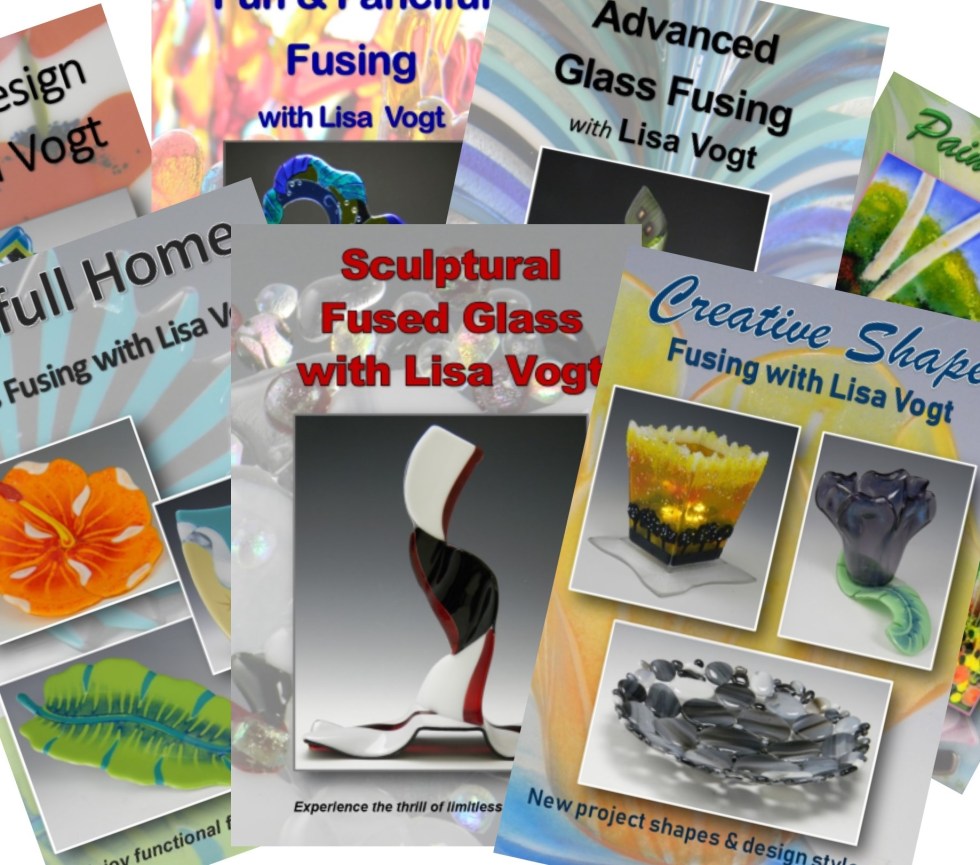
Advanced Glass Fusing with Lisa Vogt Video DVD Front Cover

Reflection as seen in my, Advanced Glass Fusing video. This is one of 8 fun projects in my full length video. Download it now at  www.LisaJVogt.com

Watch the, Reflection YouTube video here: https://youtu.be/NtYFb4PJnjQ

Fusing Guide

Segment 1: Ramp 300 F/hr to 1300 and hold 30 min.

Segment 2: Ramp 500 F/hr to 1465 and hold 10 min.

Segment 3: Ramp 9999(AFAP*) to 960 and hold 40 min.

Segment 4: Cool to room temperature.

*As fast as possible

Slumping Guide

Segment 1: Ramp 300 F/hr to 1265 and hold 10 min.

Segment 2: Ramp 9999(AFAP*) to 960 and hold 40 min.

Segment 3: Cool to room temperature.

*As fast as possible

NOTE: Kilns fire differently. Test fire these guides in your kiln and then make adjustments as needed.

Happy Fusing!

Lisa & Niki

Follow my blog for more tips and tricks!

Website www.LisaJVogt.com
YouTube http://www.youtube.com/watch?v=dhOifd7wukk
Facebook www.Facebook.com/LisaJVogt

Twitter https://twitter.com/lisajvogt

Instagram @lvogt_originalsinglass

Watch it NOW! Start fusing today!

Video covers - Copy


Downloadable instructional videos for every skill level.

Book covers

Check out my eBooks for elegant patterns and detailed fusing instructions. 
AGF Reflection 1


Posted on Leave a comment

Create Visual Excitement with Pattern & Shape

Pattern and shape are two of the simplest elements that can easily be manipulated to dramatically increase the appeal of fused glass art. By adding unique patterns and building new shapes you can draw the viewer in and lock their attention tight. In the end, isnโ€™t that our goal, to inspire people with our art?

Youโ€™ve enjoyed success making the usual plates, bowls and vases following practices and guidelines laid out by the experts. But the element of surprise and the thrill of the unexpected success has gone missing. If you find yourself blindly staring at the glass wishing for inspiration, then itโ€™s time to break the rules. Make art that excites you again.

Before you run wildly through your glass studio, be sure to set this excursion up for success. Start by studying finished art that you find attractive. Define what it is about the piece that appeals to you. Is it the shape, the colors, the pattern, or the design? Take that element and put it aside temporarily. Maybe loosely sketch it out on paper for quick reference later. Do this for three individual pieces of art.

Brilliant Bubbles by Lisa Vogt as seen in Fusing For the Adventurous Webinar

Small details can have a huge impact on the visual appearance of your art.

Donโ€™t underestimate the power of minor changes to customary pieces. When trying to navigate a new territory, youโ€™ll have the greatest success if you take what has worked for you in the past and then expand on it to create something all new and unexpected.

Hereโ€™s how to get started.

Anchor the viewerโ€™s eye with an interesting pattern. Unexpected bubbles are usually considered undesirable. But when made into a uniform design, bubbles can add a whole new dimension to the glass art. Designing with bubbles is a terrific way to add decoration and a little sparkle. Light dances inside the tiny dome shapes which increases the appearance of depth and the overall intricacy of the finished piece.

Here, Iโ€™m using stringers to establish the pattern. Theyโ€™re placed even distances apart in two directions on a base glass and then capped with clear glass. The cool thing about this technique is the assembly method dictates the placement, size and shape of the bubbles. If the openings between the stringers are square, then the bubbles are round. Rectangular openings result in oval shaped bubbles. While triangular openings give you tear drop shaped bubbles.

Making small, 2โ€ x 2โ€ test pieces will give you an opportunity to try unusual color combinations. It also builds confidence because you know what to expect when you go bigger. The best part of this technique is the possibilities for imaginative designs are endless. Try it. Youโ€™ll be blown away!

Black Tie by Lisa Vogt as seen in Sculptural Fused Glass Video

Sculpture romances the viewer.

Sculpture romances the viewer. It pulls them in like a magnet. Give your art unique shape and the viewer will be hooked. With so many fusing materials at your disposal, itโ€™s never been easier to get creative with your artโ€™s profile. The easiest way to get funky shapes is to drape fiber material over an existing slumping mold. Give the fiber paper exaggerated contours by tucking kiln posts or fiber board between the mold and the fiber.

You can also achieve new shapes by combining different ceramic or stainless-steel slumping molds together. Some of my most exciting pieces have been made this way.

If youโ€™re shy to jump in, build a sample out of clear glass. Make the sample the same shape, size, and thickness as the intended project. Clear is the best choice because itโ€™s the least expensive glass. And you can see through it to see where the glass rests on the mold assembly. Then youโ€™re able to adjust the final piece as needed. Plus, thereโ€™s no waste. The clear sample can be smashed and used for casting filler. Itโ€™s a win, win.    

The wonderful thing about this technique is every piece of glass slumped has a one-of-a-kind flare. Theyโ€™re making your own personal original. Now thatโ€™s exciting! 

Get crazy and combine both techniques and you have a showstopper. The biggest drawback to this in-depth approach is the amount of time necessary to plan an exceptional project. True, not all projects warrant this much effort. But if you work in stages on a few, youโ€™ll find the outcome is extremely rewarding.

Design developer.

Take it a step further and create your own design. Go back to the three pieces of art you studied earlier. Take the three elements that attracted you and combine them with a unique pattern and a sculptural shape. Now youโ€™re on the threshold of greatness!

These are just a few examples of breaking the rules. If youโ€™re ready to rush into your studio, excited about the possibilities, donโ€™t stop here. These techniques have great potential for expansion in so many directions. Take them and run and set your imagination free.   

For more advanced instruction check out my Sculptural Fused Glass Video.

Check out my new video: How to Create & Retain Texture.

Follow my blog for weekly inspiration sent to your inbox! 

Happy Fusing!

Lisa & Niki


Premium Video Courses by Lisa


Posted on Leave a comment

Sculptural Fused Glass – Take Your Artwork to a Higher Level

2 Currents

What does sculptural fused glass mean anyway?

Sculptural fused glass is the creation of three-dimensional forms that rise above a flat plane. Artists create 3-D works by using multiple methods and techniques with complete freedom of materials and process.

Sounds exciting, right? All you have to do is stand your art up and itโ€™s miraculously sculptural. Sure, you can do that. The word sculptural sounds exotic. Add it to any piece of art and suddenly it has a mysterious aura surrounding it and a significantly higher perceived value. But like most really exceptional work that looks easy, thereโ€™s more to making impressionable art than just erecting a flat piece of fused glass.

The real difference between art and craft is the depth of immersion the creator puts into the creation of their art.

Hobbyists copy. They follow outlined directions and build pretty pieces according to a pre-tested recipe. Donโ€™t get me wrong, thereโ€™s nothing wrong with doing that. Hobbyists want to know theyโ€™ll be successful and have beautiful results. Especially after all the time and money theyโ€™ve spent on a pass-time.

Iโ€™m a hobbyist when it comes to other popular hobbies like music, bird watching and video games. Thatโ€™s how we learn. By following the pros and picking up their tricks, we learn how to make things weโ€™re proud of and admire.

And if you become hooked, maybe you take your hobby a step further. You try new techniques and experiment by mixing techniques or combining ideas that inspire you. This is the threshold of advanced learning and the blossoming of self-discovery. You wonder, what can I do? What can I make? How far can I go? And the real question is, what am I capable of artistically.

Hobbyists often start a hobby to relax and enjoy quiet time. They are content to stay in the shallows where itโ€™s safe and they are successful. And thatโ€™s admirable.

Artists, on the other hand, take their commitment more seriously. Theyโ€™re drawn to a medium by an invisible magnet. From the start theyโ€™re compelled to learn as much as possible about that art form. They have every intention of progressing, to work on bigger, better, more advanced projects. They head for the deep end without looking back and, sink or swim, give it all they have.

Interwoven

What does this have to do with sculptural fused glass?

Sculptural fused glass is the product of such artists. Theyโ€™re the ones who go above and beyond. They challenge convention and push boundaries.

You may think it takes extensive experience and an impressive glass studio to be one of those pioneers. Youโ€™d be wrong. Your most valuable assets are a positive attitude, insatiable curiosity and a fearless willingness to try. Just try. Trying is worthy of celebration and cheers.

1 Flourishing

How to get started.

I recommend making small 2 inch x 2 inch samples using different, new techniques that intrigue you. This gives you construction and firing experience with these new methods to see how they fire in your kiln. Then consider mixing methods that youโ€™d usually do independently. Take these component pieces and cut them up. Then put them back together in a new way.

Slump plain clear fusible glass over molds in unique ways. Try combining different shapes to make sculptural groupings all your own. Again, start small. You can always take a successful project larger. Once you have a winning combo slump your component pieces the same way.

Take notes and pictures so you can repeat your successes and learn from mistakes.

Your biggest obstacle is likely you. Get out of your own way. Start small. Make tiny changes. Results are results. They donโ€™t have to be monstrous to have enormous value.

If youโ€™ve come this far in your craft, if youโ€™re continually seeking inspiration, knowledge and community, I believe you have it in you to create your own unique sculptural fused glass.

You got this!

Happy fusing!

Lisa & Niki

Follow my blog for more tips and tricks!


Become a Premium Video Member TODAY!

Video covers - Copy

Watch it NOW! Start fusing today!

Download instructional videos for every skill level. Book covers

Check out my eBooks for elegant patterns and detailed fusing instructions. 

2 Currents


Posted on Leave a comment

Defy Conventional Thinking and Make Something Amazing in 5 Easy Steps.

Knowledge – Confidence – Inspiration

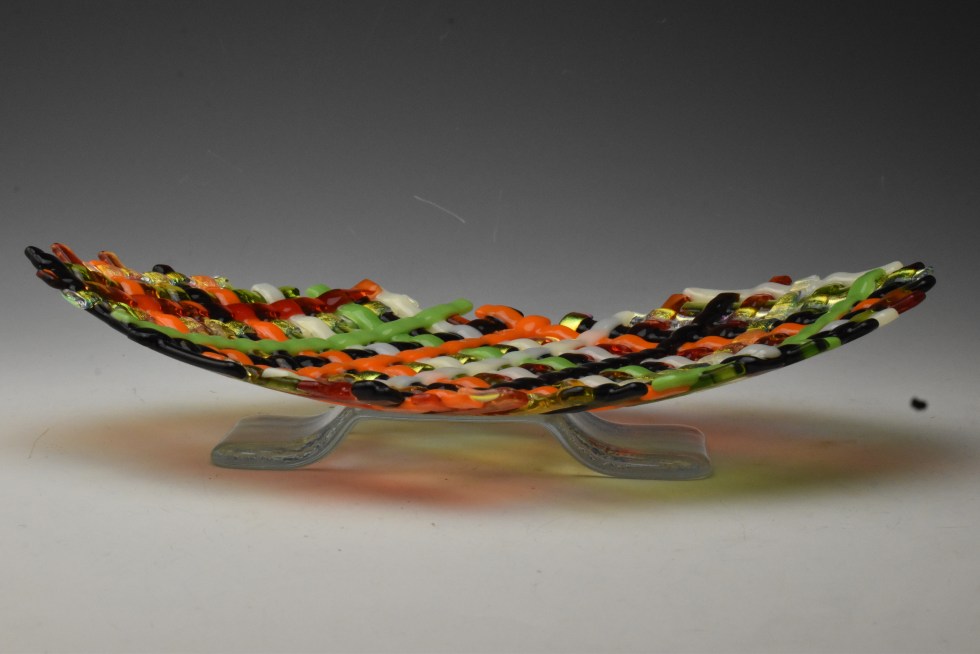
Weave Bowl Project Video

Start with a unique oval shape.

The oval is an elegant shape traditionally associated with luxury and wealth. Itโ€™s a shape thatโ€™s easy to make in glass. I honestly donโ€™t know why, we as high thinking creatives, donโ€™t take advantage of its particular attraction more often.

Iโ€™ve used the weave technique many times to make square bowls and rectangular lanterns. The openness of the construction, and the playful overlap of colors combined with the fascinating texture all contribute to the charm of the finished piece. I thought to myself, how can I take this winning combination to the next level? The answer of course was to use this simple, but effective technique to make an unexpected oval shape.

Fabricate your piece with a distinctive glass weave technique.

My weave technique is super easy, surprisingly fun to use and produces very effective results. Itโ€™s simple. Pick a color palate and cut a series of ยผ inch wide strips of glass. Cut more strips than you think youโ€™ll need to make your project. This way you have extra and wonโ€™t have to interrupt the assembly step to cut more glass. I used both transparent and opal glass, plus dichroic glass on clear.

Draw the oval shape on a primed or fiber paper covered kiln shelf. The weave is made with 4 layers of glass strips. I laid my strips out diagonally for added interest. Layout layer 1 leaving plenty of room between the strips for layer 3. Cut the pieces to size. I intentionally cut my pieces to create a fringe edge. Layout the strips for layer 2 in the opposite direction. Leave room between the strips for layer 4. Repeat with layer 3 and 4. Carefully load the kiln shelf and assembled project in the kiln. Fire to a Tack Fuse temperature.

Use the heat of your kiln to create your own custom results.

This project is tack fused together. At this temperature the resulting project retains the woven texture.  The pieces are heated to the point where they stick together, and the bond is strong enough for the project to support its own weight. The attractive textural quality is both visual and physical which makes the piece more engaging. Consider using the tack fuse temperature to add details and accent pieces to fused glass art to introduce another facet of interest. Here, on this weave bowl the tack fuse option really increases the level of sophistication of this piece of art.   

Slump your glass to give it a graceful profile.

Slumping adds elegance and a pleasing three dimensional quality to your fused glass art. The physical texture created by the weave is also greatly enhanced by the gradual curvature of the bowl shape.

Finish with a custom base worthy of your exceptional artwork.

Making a custom stand or base is equally as exciting as making a striking piece of art. Itโ€™s rewarding to follow thorough to the natural completion of a project with a display that shows it off. A base gives the art lift which immediately increases the perceived value and visual intricacy of the finished piece. It also allows light to go through the glass and cast reflections that enlarge the overall impression of the art.  Keep the stand or base simple. It should add to the art, not overpower it, or distract from itโ€™s beauty.   

Keep the dream alive!

One of the many things I love about working with glass is the endless design and fabrication options that are available to us. There are an abundance of exciting new approaches waiting for you to discover when you venture down the less traveled path of experimentation. Letโ€™s go!

Happy Fusing!

Lisa & Niki

Follow my blog for weekly inspiration sent to your inbox! 

Tell them how you really feel with sassy mugs, Eco-totes and bold T-shirts!

Downloadable instructional videos for every skill level.

Posted on Leave a comment

3 Ways to Develop You Own Design Style

Glass fusing is more popular than ever. The originality and quality of work Iโ€™m seeing in galleries, on websites and in our fusing groups is amazing. With so many enticing techniques to try itโ€™s tempting to copy other artistโ€™s work.

We all want guarantees that our limited time, hard work and expensive materials will produce dependable, beautiful results every time. And so, we play it safe and continually make the same reliable projects. Or we take the easy route and reproduce otherโ€™s work that we find attractive. But, it doesnโ€™t have to be that way. You can develop your own individual design style. By applying a few simple concepts, your finished work and the time spent creating it will be more rewarding and exciting. 

1. Be Original!

Itโ€™s all been done before you argue. How can I be original, you ask? Yes, itโ€™s all been done. But even the simplest techniques seen through your special artistโ€™s lens and executed with your skilled hands can produce all new results.

To advance beyond routine projects begin by examining art that you admire. When you see a piece of art that really speaks to you, study it. Reduce your admiration down to the most basic attribute of the art. What really captures your interest? Is it the color, the shape or the imagery? Take that feature, hold on to it, then put it aside temporarily. Look at another piece of art. Identify the specific characteristic that you find attractive and put that feature aside temporarily. Do this for a third piece of art. Study it until you know exactly what trait appeals to you. Then take those three characteristics and combine them and youโ€™re guaranteed to design your own original art.

2. Shape Up!

One of the fastest and easiest things you can do to make your art stand out is to give it a unique shape.

The most common shape for fused glass projects is the square. Primarily, because itโ€™s economical, thereโ€™s no waste. And, because thereโ€™s very little cutting, it enables you to get right to the fun stuff, building the design. Itโ€™s also popular with beginners and hobbyists with basic cutting skills. By moving away for the square, you immediately increase the visual value of your work.

The rectangle is popular for the same reasons. If you change the shape of your square or rectangle, even slightly, youโ€™re sure to engage the viewer longer.

The circle is traditionally a very pleasing shape. It requires a higher skill level to cut and therefore is more unique. But it also benefits from innovative thinking and a fresh approach to the perimeter shape.

How do you come up with new shapes?

I like to draw quick, no obligation sketches on note book pages. I resist the urge to self-edit or limit the creative flow. The pencil just glides over the paper making a mess of the previously clean white space. The first few sketches usually resemble familiar, safe shapes and designs. But once those are out of my head, suddenly thereโ€™s room to be more creative. All new shapes begin to develop.

During these exercises Iโ€™m free to draw the impossible.

I then take bits and pieces from the shapes that I find interesting and remix them to create my own new, project profiles. And sometimes, if Iโ€™m lucky, I even manage to figure out how to build the impossible ones.
3. Combine Fusible Techniques

Putting it into practice.

The beauty of this approach is the techniques donโ€™t have to be super difficult to have a positive impact on your new work. We all have our favorite, trusted, go-to techniques. Start there.  

Using a complimentary color scheme, make three individual pieces, using three different methods. Cut the pieces up. Reinvent their roles in your art. Move them around. Change the composition a few times. If nothing thrills you, set them aside and let your creative subconscious have a turn.

Donโ€™t force the grouping. I find that once I relieve the pressure to solidify a design, one presents itself. And the new composition is usually one that I otherwise would never have thought of. In cases like this, I believe the physical, ready made pieces guide and influence the discovery of innovative designs. Try it. Youโ€™ll be amazed how this abstract assembly opens your mind to fresh ideas.

Trust yourself.    

Design with confidence. Resist the impulse to compare yourself or your work to others. Instead, blaze your own trail and donโ€™t look back. Take pride in your individuality and what you contribute to the craft.

Take risks to further develop your personal design style. Nurture your unique artistic perspective and your creative spirit will flourish.

Happy fusing!
Lisaย & Niki

Follow my blog for weekly inspiration sent right to your inbox.

Join my Premium Video Course Membership

Artwear T’s by Lisa Vogt

Artwear Designed for Artists by Artists Tell them how you really feel with bold T-shirts, Eco-conscience tote bags and sassy mugs.

Artwear Eco-totes by Lisa Vogt
Artwear Mugs by Lisa Vogt

Get it now! Start fusing today!

Downloadable instructional videos for every skill level.

Instructional eBooks for every skill level.